The past two months or so have been some of the busiest
I’ve had thus far here in Botswana, so I apologize for the lack of updates! I
was in Gaborone, the capital city, for two weeks of training, then I was in
Senegal for two weeks of another training, followed by three days at home
before traveling back to the capital for a week of another training. I then
travelled to India for a week before FINALLY returning to Shakawe. Being away
from my village was incredibly difficult, especially because I wanted to be
home and starting to work on projects, but had to attend so many mandatory
trainings. I was extremely worn out and over-saturated by the time I took my
first vacation in about seven months. Below are some retrospective blog updates
about these crazy few weeks away from site.
Sunday, 29 March 2015

Malaria is a buzz kill! -- A visit to Senegal

Thies, Senegal
Following two weeks in Gaborone for our in-service
training, I was lucky enough to be one of three Botswana volunteers to travel
to Senegal for an in-depth training on malaria interventions. The training was
a Peace Corps training, held at the PC Senegal training center. There were
volunteers from all over Africa, including Cameroon, Benin, Ghana, Malawi,
Uganda, Burkina Faso, The Gambia, as well as PC staff members from countries
who currently don’t have volunteers for various reasons (Kenya, Liberia,
Guinea).
It was really interesting to hear bits and pieces about
other volunteers’ experiences. But at times it was definitely frustrating. More
and more I am realizing there is a competitive culture among Peace Corps
volunteers to make it known how difficult your own experience is. While we were
in Senegal, I noticed this dynamic was extremely present…almost in a passive
aggressive way. I witnessed some volunteers putting down the service of others
in order to make their own seem more legitimate, maybe because they have to
suffer more or handle more hardships on a daily basis. However I also realized
early on how ridiculous this is…not having electricity or running water does
not make an individual a better Peace Corps volunteer. In fact, I think a good
argument could be made for the contrary. Hearing these undermining comments
being tossed around while with these other volunteers also made me question
individuals’ reasons and intentions as volunteers. Sure, I think it is safe to
say we are all hoping to get some sort of personal growth out of our
experiences, but it seemed to me that for some people, this was more of a
priority than helping their community grow. Regardless, after two weeks of this
dynamic and four weeks of being away from site, I was ready to return to
Botswana.

But aside from this competitive spirit that was
exhausting, the training was really fantastic. We were able to Skype with
individuals from incredibly important offices in the global fight against
malaria such as the CDC, PMI (President’s Malaria Initiative), Johns Hopkins,
and more. As you can guess, I was public health geeking out pretty much for the
entire two weeks. The training shed a lot of light for me on how PC trainings
should and could be conducted, as well as highlighting the ways in which our
training in Peace Corps Botswana could be improved (tips which we shared with
our own training staff). We also learned a lot about technical tools like
survey initiatives, doer/non-doer analysis and logical frameworks—all tools for
behavior change that can be applied in so many ways to the work we do in our
respective countries.
We also were able to spend a day at a beach while there,
which was glorious. It was the Atlantic Ocean, and if I turned my back on the
buildings along the beach and just looked out at the water, I swear it could
have been Delaware. It brought me so much comfort, more than I was expecting and
more than I thought I needed.
I only saw a very small part of Senegal, but I realized
how much I love Botswana. It was incredibly frustrating not having any way to
communicate with the people there. I don’t speak any French, and obviously know
nothing of the local language, so I had to rely on others I was with who could
communicate. I found it really debilitating not being able to communicate with
people directly, especially when trying to haggle down a price. Senegal also
has millions and millions more people living in it than Botswana, and it showed
in a lot of ways that was at times overwhelming. Returning to Botswana was
relieving. Being away had made me realize, without my knowing, that Botswana
has become familiar and comfortable. It has become my home.

India--Sugar, Spice, and Everything Chai

Street food was the best (yep, that's a gigantic pat of butter in the middle)

We got used to getting around on "tuk-tuks," or glorified motorized tricycles
For the first week in March, I traveled to India with eight other Peace Corps volunteers. After not being allowed to travel for six months, a few volunteers were looking up plane tickets to different places to travel for cheap. They decided on Mumbai, and soon several others decided to go as well. India has long been a place I have wanted to travel to, but never got to until recently. And, let me tell you, I will be going back.

It was an intense week which I won’t give all of the
details for here, but I’ll describe some of my favorite moments and parts of
the trip:

Crawford Market: There was a huge market inside of an old
warehouse building that sold everything from toilet paper to spices to puppies (see picture to the right).
It was incredibly crowded, but it didn’t phase me. There was so much to take in
at each stall that I could have spent the whole day there. One of my favorite
moments was seeing a tour group of white people with headphones paused at one
of the stalls as their tour guide led them in an audio tour.


The mosque was located out in
the water ad was only accessible via a long causeway. We went there just after
the sun set, and the lighting was beautiful. For a while we just sat on the
outer wall and watched the retreating tide. There were also men there playing
some kind of devotional music as Muslin families sat around listening.

The mosque at the end of a causeway
I think the Jain temple was my
favorite. It took us a while to find the temple, and we almost gave up. When we
arrived, there was a group of about 10 women sitting cross-legged in the middle
of the temple singing, playing tambourines, and hitting sticks together. Three
of us went in together and observed the goings-on from the outskirts of the
adorned main room. We didn’t want to be in the way, but we also wanted to take
it all in. After a few minutes, a couple of the women beckoned us over to sit
with them. They trusted us with a couple of tambourines, and we did our best to
keep the beat as they continued singing. After ten minutes or so, they were
finished praying, and we stood up to leave. The woman I was sitting next to
motioned for us to wait a moment, as she and another women were fumbling with
some Rupees. We figured they were going to ask us for money we didn’t have to
spend, so we thanked them and started to leave. One of the women came running
down the steps of the temple to catch us, and gave us each a 50 Rupee note
(about 1USD). She told us it was a sign of gratitude for coming for coming to
visit their temple, and that it was something they do for everyone. It wasn’t meant
to be materialistic, just a symbol of inner gratitude. After at first starting
to refuse the money, we realized this was a non-negotiable donation which would
have been rude to refuse outright or give back. So we took the money and
instead decided to pay it forward somehow.

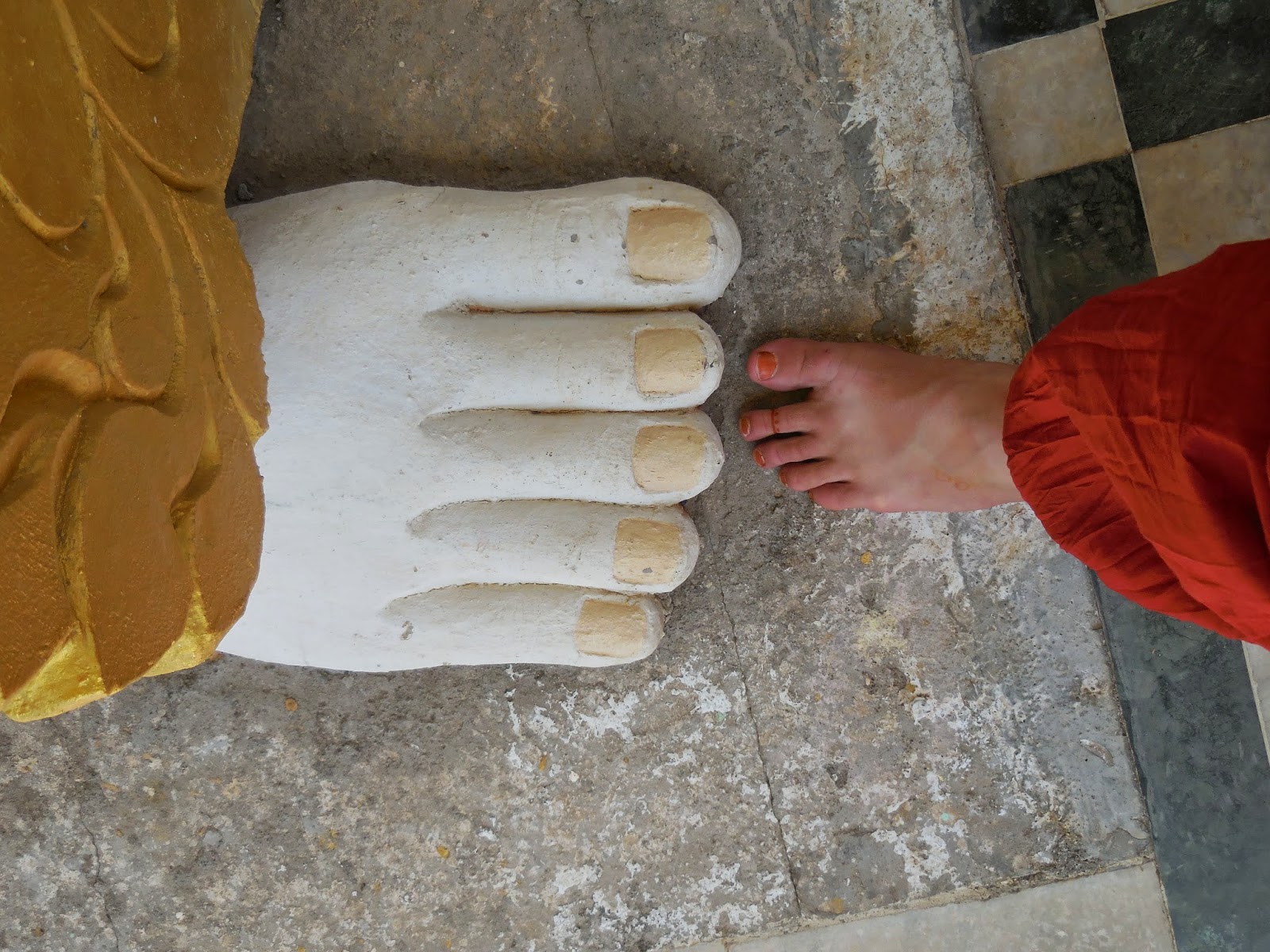
The Buddhist temple (above) was also
incredible. It was built only within the last few years, but the enormous
gold-domed structure was created entirely with interlocking stones and without
any structural supports. It is the biggest of its kind. We were not allowed
into the large structure because we have not completed the 10-day Dhama
mediation course required to enter. So instead, we were allowed into a smaller
adjacent temple where 20-minute long mediation sessions were led for visitors.
But we ended up in there with about 100 school kids who were there on a field
trip. It was hard to find the peace we were seeking, but was definitely still
an experience.


 We also visited an island off of the coast of Mumbai with
what is known at the Elephanta Caves (see pictures on right)—Hindu caves carved out of the rock face
with Hindu deities gracing the walls. In Mumbai there is also Asia’s largest
laundromat, which we obviously had to take time to see. It was a pretty
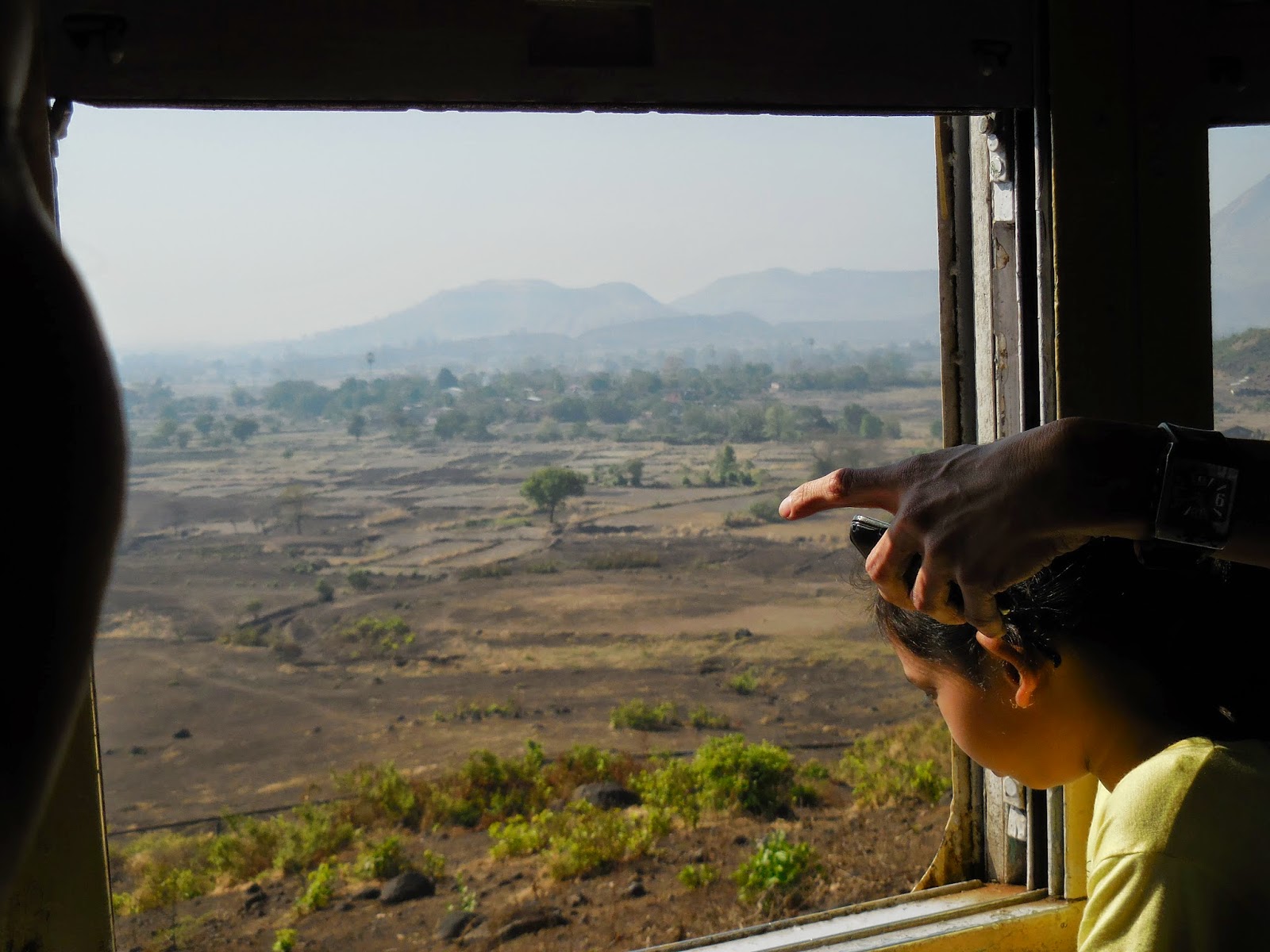
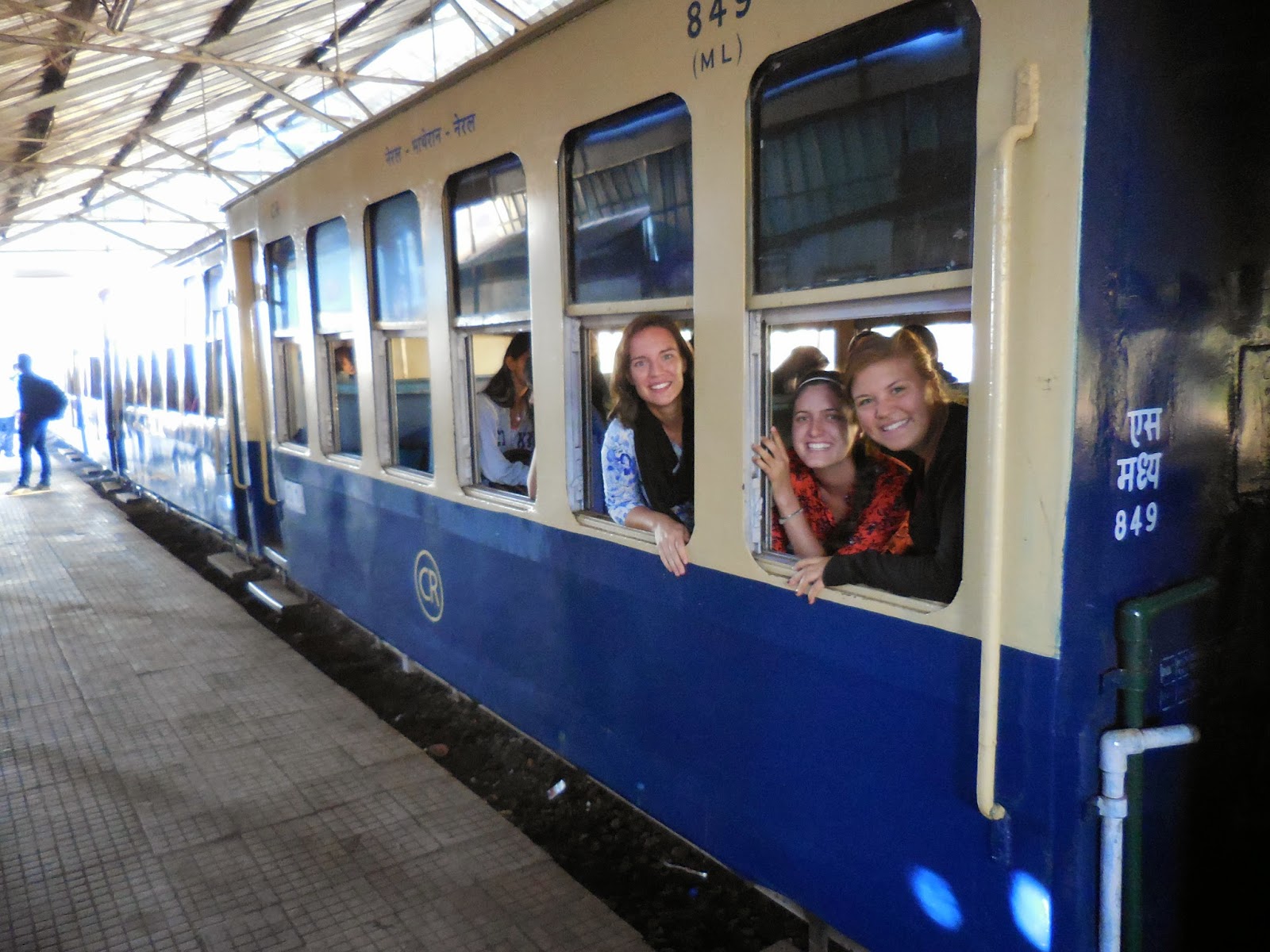
incredible operation! We also spent a day outside of Mumbai in a little town
called Matheran that has been dubbed a UNESCO World Heritage Site. There are no
cars or even bicycles allowed in the town, which is perched on top of the
hillside. You can only access it on foot, by horse, or by train. There is a toy
train which takes two hours to reach the town from a station on the outskirts
of Mumbai. It snakes around the hills next to incredible drop offs that
wouldn’t have bothered me if it weren’t for a sign in the train car that warned
passengers not to crowd one side of the train because the weight imbalance was
extremely dangerous. Even in the dry season when things weren’t green, the
views were truly incredible.
We also visited an island off of the coast of Mumbai with
what is known at the Elephanta Caves (see pictures on right)—Hindu caves carved out of the rock face
with Hindu deities gracing the walls. In Mumbai there is also Asia’s largest
laundromat, which we obviously had to take time to see. It was a pretty
incredible operation! We also spent a day outside of Mumbai in a little town
called Matheran that has been dubbed a UNESCO World Heritage Site. There are no
cars or even bicycles allowed in the town, which is perched on top of the
hillside. You can only access it on foot, by horse, or by train. There is a toy
train which takes two hours to reach the town from a station on the outskirts
of Mumbai. It snakes around the hills next to incredible drop offs that
wouldn’t have bothered me if it weren’t for a sign in the train car that warned
passengers not to crowd one side of the train because the weight imbalance was
extremely dangerous. Even in the dry season when things weren’t green, the
views were truly incredible.
Photos from the trip to Matheran:

I also was able to meet up with my friend Giovanna, who I
worked with at Joseph’s House last year. I hadn’t seen her since last May, and
spending even three days with her put me so much at ease. There has been a lot
going on recently with some of the residents we worked with at the house, and
being able to process all of that with her gave me so much peace. Somehow, the
time I spent with her and hearing about her own adventures, helped recenter me
with the work I am doing back in Botswana—she helped remind me why I decided to
do Peace Corps. It’s so easy to get lost in yourself and your life and your
loneliness here that it’s not hard to forget your purpose. She helped me to
come back to Botswana with new focus, excitement, and meaning for life here. If
that’s not a good friend, I don’t know what is. I’ve always said she’s my soul
sister, and seeing her in India, of all places, was just what I needed.

with huge bonfires in the streets.
People built pyres in the streets that were maybe eight or more feet tall out
of wood and straw. The next day people throw colored powder at each other in a
playful way. Random people would just come up to us with a handful of color and
smear it over the side of your face with a resounding “Happy Holi!” There were
a couple instances where people came from behind and cracked eggs over other
people’s heads. I was lucky enough to avoid it, but about four others in the
group I was in weren’t. And, of course, we were targets as a group of eleven
white foreigners walking around Mumbai together. At one point, we were ushered
into a Holi party at a secondary school where there was music and sprinklers
dousing the crowd as well as a bubble machine. We were in there for about ten
minutes while the “press” took lots of pictures and videos of the white people
dancing around, but then they asked us to leave seeing as it was a members-only
party. It was fun while it lasted though! By the end of the day, we were pretty
disgusting and exhausted, but it was entirely worth it.


We visited the largest laundromat in Asia (and forgot to bring our laundry...)

A couple of friends at the Gateway to India


Malaria is a buzz kill! -- A visit to Senegal
Thies, Senegal
Following two weeks in Gaborone for our in-service
training, I was lucky enough to be one of three Botswana volunteers to travel
to Senegal for an in-depth training on malaria interventions. The training was
a Peace Corps training, held at the PC Senegal training center. There were
volunteers from all over Africa, including Cameroon, Benin, Ghana, Malawi,
Uganda, Burkina Faso, The Gambia, as well as PC staff members from countries
who currently don’t have volunteers for various reasons (Kenya, Liberia,
Guinea).
It was really interesting to hear bits and pieces about
other volunteers’ experiences. But at times it was definitely frustrating. More
and more I am realizing there is a competitive culture among Peace Corps
volunteers to make it known how difficult your own experience is. While we were
in Senegal, I noticed this dynamic was extremely present…almost in a passive
aggressive way. I witnessed some volunteers putting down the service of others
in order to make their own seem more legitimate, maybe because they have to
suffer more or handle more hardships on a daily basis. However I also realized
early on how ridiculous this is…not having electricity or running water does
not make an individual a better Peace Corps volunteer. In fact, I think a good
argument could be made for the contrary. Hearing these undermining comments
being tossed around while with these other volunteers also made me question
individuals’ reasons and intentions as volunteers. Sure, I think it is safe to
say we are all hoping to get some sort of personal growth out of our
experiences, but it seemed to me that for some people, this was more of a
priority than helping their community grow. Regardless, after two weeks of this
dynamic and four weeks of being away from site, I was ready to return to
Botswana.
But aside from this competitive spirit that was
exhausting, the training was really fantastic. We were able to Skype with
individuals from incredibly important offices in the global fight against
malaria such as the CDC, PMI (President’s Malaria Initiative), Johns Hopkins,
and more. As you can guess, I was public health geeking out pretty much for the
entire two weeks. The training shed a lot of light for me on how PC trainings
should and could be conducted, as well as highlighting the ways in which our
training in Peace Corps Botswana could be improved (tips which we shared with
our own training staff). We also learned a lot about technical tools like
survey initiatives, doer/non-doer analysis and logical frameworks—all tools for
behavior change that can be applied in so many ways to the work we do in our
respective countries.
We also were able to spend a day at a beach while there,
which was glorious. It was the Atlantic Ocean, and if I turned my back on the
buildings along the beach and just looked out at the water, I swear it could
have been Delaware. It brought me so much comfort, more than I was expecting and
more than I thought I needed.
I only saw a very small part of Senegal, but I realized
how much I love Botswana. It was incredibly frustrating not having any way to
communicate with the people there. I don’t speak any French, and obviously know
nothing of the local language, so I had to rely on others I was with who could
communicate. I found it really debilitating not being able to communicate with
people directly, especially when trying to haggle down a price. Senegal also
has millions and millions more people living in it than Botswana, and it showed
in a lot of ways that was at times overwhelming. Returning to Botswana was
relieving. Being away had made me realize, without my knowing, that Botswana
has become familiar and comfortable. It has become my home.
Tuesday, 13 January 2015
A photo update from the last several weeks
For those of you more visually-inclined, here are some miscellaneous photos and side stories to give you an idea of some of the highlights from my first few months at site. Spoiler alert: cat photos at the bottom of this post!

We went to a small village called Nxamasere to watch the sun set one evening and found a group of mokoros (traditional canoes made out of a single hollowed tree). Naturally I had to hop in one. Sorry about the little girl in the background...she's having almost as much fun as me, clearly.


Crocodile Hatching (yep, you read that right). There is a crocodile farm about 10k from my village where another PCV (Peace Corps Volunteer) is living. They breed Okavango crocs for skin, meat and also for educational/conservation purposes. We have visited it a couple times--the first time to take a tour and collect eggs, and the second time to help a nest collected back in September hatch!


Who let the adorable cat out of the bag?? That would be me.
Meet Tsala (Setswana word for "friend"). She was 8 weeks old when I first got her from an old Hambukushu lady. I carried her home in the sack you see below, and the first night, which she spent in my bathroom, she was terrified. But by the next morning she purred right before I left for work, and she hasn't stopped since. I knew we'd be buds. :)


This is my new house! I recently moved from one that is just outside of this picture. It is super old, has cracks running down the walls, no running water, a tin roof that heats up like a hot plate during the day, tons of termite damage, but its just what I needed.
_____________________________
We went to a small village called Nxamasere to watch the sun set one evening and found a group of mokoros (traditional canoes made out of a single hollowed tree). Naturally I had to hop in one. Sorry about the little girl in the background...she's having almost as much fun as me, clearly.
A local bringing a mokoro back in.
They are often used for fishing because they glide nicely through small, shallow channels.
___________________________________
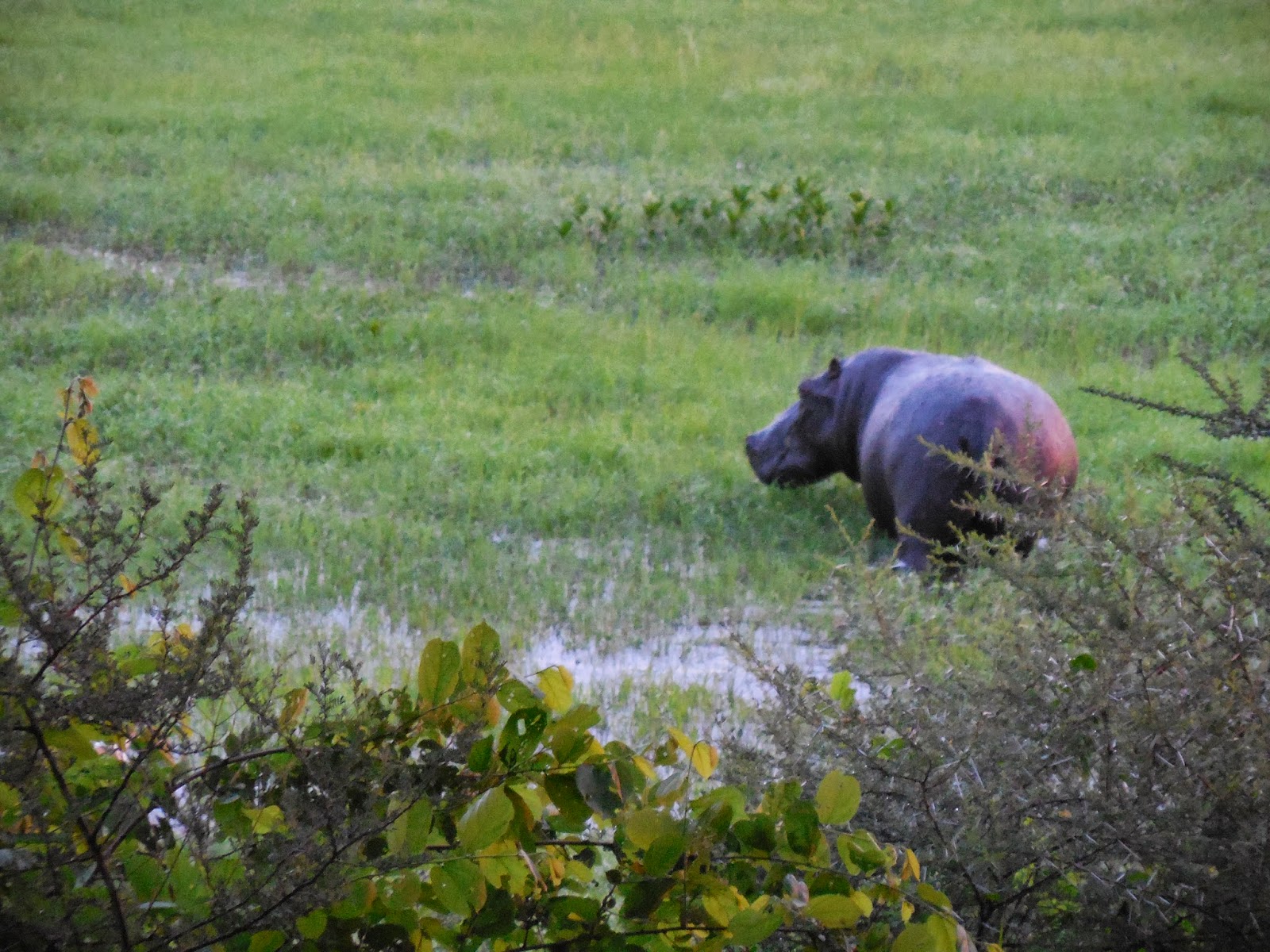
I went for a walk one morning and literally almost bumped into this guy in the bushes outside of my back gate. By the time I took this picture he was retreating to the river.
_______________________________________________
Crocodile Hatching (yep, you read that right). There is a crocodile farm about 10k from my village where another PCV (Peace Corps Volunteer) is living. They breed Okavango crocs for skin, meat and also for educational/conservation purposes. We have visited it a couple times--the first time to take a tour and collect eggs, and the second time to help a nest collected back in September hatch!
We collected these eggs from a nest in one of the enclosures. They will stay in an incubator for 90 days until they are pulled out to hatch (which we helped with!)
Literally peeling off the shells. Some of them had already broken through, while others needed some help. They were super slippery!
_________________________________
I helped out at a holiday party for OVCs (orphans and vulnerable children) on a farm in Mohembo, the village right near the Namibian border. Even though my face painting skills are mediocre at best, for a crowd of kids who had never had their faces painted before, I might as well have been Monet.
______________________________
Who let the adorable cat out of the bag?? That would be me.
Meet Tsala (Setswana word for "friend"). She was 8 weeks old when I first got her from an old Hambukushu lady. I carried her home in the sack you see below, and the first night, which she spent in my bathroom, she was terrified. But by the next morning she purred right before I left for work, and she hasn't stopped since. I knew we'd be buds. :)
Tiny Tsala in a big sack.
Tsala on her favorite perch in my new house. She likes to keep an eye on the birds in the tree outside from here. And she can look down on the dogs, too.
That's all for now, more to come soon :)
Sunday, 11 January 2015
A girl and her goat: A love story.

A while ago I was walking in a busy part of the village
around 5pm when I passed a tiny goat all by itself. It was a strange place to
see a goat and it wasn’t crying out as they usually do when they are separated
from their herd. I approached him(?) tentatively, glanced around, and then
scooped him up. I wasn’t really thinking through what I was doing, and I
quickly walked home with him. Unfortunately I was on my way somewhere (and was
now late), so as soon as I got home I put the goat in my bathroom and ran back
out again.
When I got home later that night I panicked a little bit.
How on earth do you take care of a baby goat that is probably less than a week
old? I did some quick research and found that it’s not uncommon for mother
goats to abandon their kids, meaning they reject them and don’t let them nurse.
I found a recipe for kid milk (believe it or not) and tried to feed him. I
didn’t have a bottle, but with the suggestion of my friend Hannah (who
conveniently called at that moment and provided goat-rearing moral support), I
soaked a washcloth in the milk mixture and let him suck on it. It wasn’t great,
but it did the trick.
I soon realized, however, that I couldn’t keep this
adorable little goat. The next morning I took the goat with me to work, because
I always pass a herd of goats on my way. When I ran into them as expected, I
put him with the herd and walked away. It was heartbreaking to see him try to
drink from many of the mother goats, all of whom rejected him. I had to just
walk away at that point, I had done everything I could, so I walked the rest of
the way of the clinic and tried not to think about the little guy anymore.
 About five hours later, I left the clinic for lunch.
Directly outside of the gate was the tiny goat, all by himself. I swear it was
like he was waiting for me. I don’t believe in coincidences, so of course I
scooped him up again and walked home. Yep, I was that random white girl in the
village walking around carrying a baby goat. As if I needed that extra
attention.
About five hours later, I left the clinic for lunch.
Directly outside of the gate was the tiny goat, all by himself. I swear it was
like he was waiting for me. I don’t believe in coincidences, so of course I
scooped him up again and walked home. Yep, I was that random white girl in the
village walking around carrying a baby goat. As if I needed that extra
attention.
I spent the afternoon collecting old cinderblocks from
around the yard and creating a small corral for him. I also bought a baby
bottle to feed him with. He had a huge appetite! Clearly I was in this. For
about a week, I put him in the corral during the day and let him out to graze
whenever I was home. This proved difficult because one of the dogs that hangs
out in my yard was a little too interested in the goat. The kids who come over
to color sometimes loved feeding him and playing with him. Maybe they thought
it was strange that I was treating him like a small child, but I think they
found it funny more than anything else.

The goat kept nibbling on the ends of their markers.

One of the dogs (Buddy) a little too interested in the baby goat.
 \\
\\
My frustration from having to hold him back from chasing down the goat...
But there were a couple different people at work who told
me the owner of the goat was probably looking for him. Livestock is property and
a means to income, and as much as I really loved that goat, I knew I couldn’t
keep him. So that Friday, just like before, I put him back with the herd I
passed on my way to work. This time though, I didn’t watch what happened. I
made sure he was with the herd, and then I walked away.
 Even though there are hundreds of goats in this village,
I look for the little guy every day.
Even though there are hundreds of goats in this village,
I look for the little guy every day. Thursday, 8 January 2015
On Loneliness.
So it has been a while since I’ve posted anything. I wish
I could say it is because I have been insanely busy with projects and exciting
new programs. But that’s just not the case. The truth is I’ve been a slug. A
lonely, it’s-too-hot-to-move, lazy slug. You’d be surprised how impossible it is to do
anything when you feel this way. Even though we were allowed to visit fellow volunteers
in our shopping village over one of the holidays, it proved harder than
expected to be so alone during a time of year where I’m usually surrounded by
family. I’ve never missed a Christmas or Thanksgiving with my family, and I
really felt that here.
I’m an introverted person with some extroverted
tendencies, and I really relish time to myself. I thought that this level of
isolation and aloneless would give way to lots of reflection and creative uses
of my time. But, honestly, more often than not I pass the time by watching TV
shows or movies that I hoarded on my hard drive during training back in Serowe.
Because it feels easier to lose myself in some crappy TV show that I would
never have watched in the States rather than let myself dwell on my new found
loneliness. I have bursts of alternative uses of time though. Like when I spent
a Sunday sewing new curtains for my house, or the week when I spent every
evening after work digging my garden. But those things sometimes take effort,
and just existing here can be truly exhausting.
But I’ve realized that my discomfort with being alone is
in direct proportion to the number of hours I spend in my house and by myself,
naturally. There are some days when I realize that I haven’t had a real
conversation (esp in English) in over 24 hours. And those are the hard days. The
difficult part comes when you find yourself in a rut, feeling sorry for
isolated self, but knowing that you need to go out and walk around the village.
You know it will make you feel better, but if you’re at that point of
recognition, it can be incredibly difficult to change out of your unwashed,
minimal clothing (who wants to do laundry when it’s so incredibly hot outside….who
even wants to move?) and leave the house. But it is always a good decision. Always.
Subscribe to:
Posts (Atom)